
ASTM A53 vs ASTM A106 Steel Pipe: Grades, Service and Ordering
Direct answer: ASTM A53 and ASTM A106 are not interchangeable labels. A53 covers specified types and grades of black and hot-dipped zinc-coated welded and seamless steel pipe, while A106 covers seamless carbon steel pipe for high-temperature service. The correct choice depends on the governing specification, product type, grade, dimensions, service requirements, tests, and the edition cited by the purchase order.
This guide is a procurement comparison, not an engineering design rule. The applicable project specification, current standard edition, design authority, and material test certificate (MTC) govern final acceptance.
Scope and Product-Type Boundaries
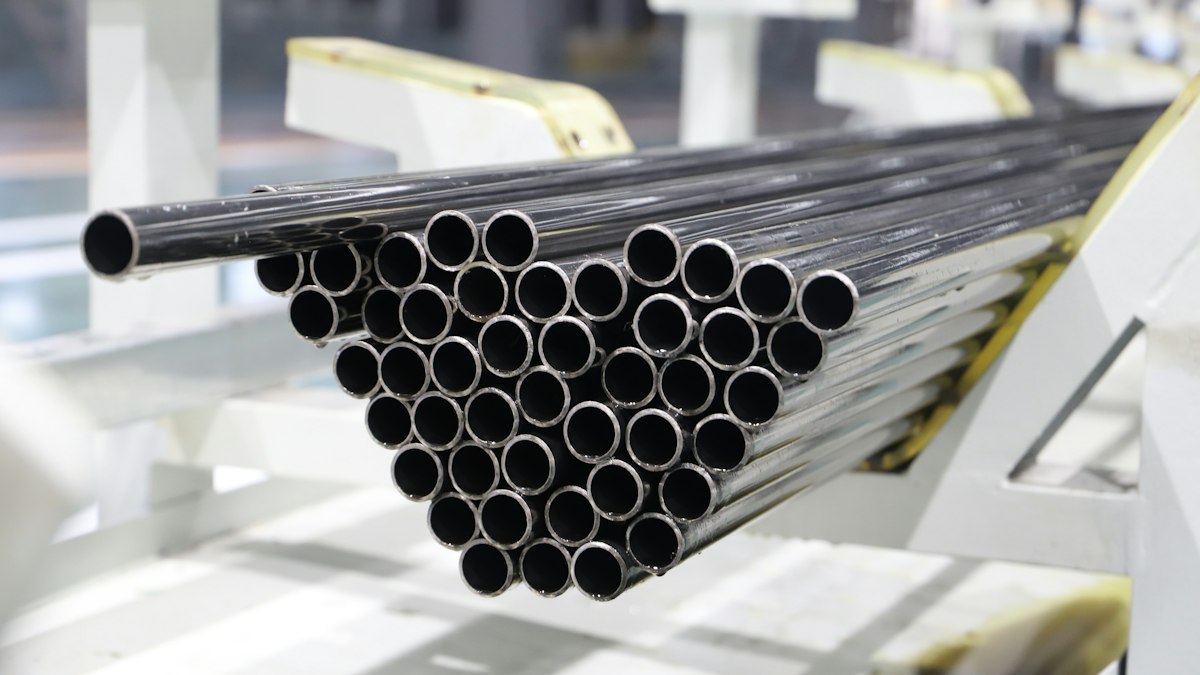
The first purchasing distinction is product scope. ASTM A53 includes Type F furnace-butt-welded, Type E electric-resistance-welded, and Type S seamless pipe, subject to the types, grades, sizes, and requirements available in the specified edition. ASTM A106 is a seamless carbon steel pipe specification associated with high-temperature service. Therefore, a buyer should never shorten the requirement to “A53/A106 pipe” without stating which standard is mandatory and whether dual certification is actually required.
| Purchase question | ASTM A53 | ASTM A106 |
|---|---|---|
| Basic scope | Black or hot-dipped zinc-coated welded and seamless steel pipe within the specification scope | Seamless carbon steel pipe for high-temperature service within the specification scope |
| Manufacturing route | Specified welded and seamless types are covered; state the required type | Seamless |
| Grade callout | State the exact grade required by the project and applicable edition | State the exact grade required by the project and applicable edition |
| Buying implication | Do not assume every A53 type, grade, coating or end finish is equivalent | Do not assume “seamless” alone confirms A106 or suitability for a service condition |
Grades, Service Context and Document Control
Grade B is frequently requested under both standards, but the same grade letter does not erase the difference between the standards. Chemical, mechanical, heat-treatment, testing, marking and dimensional requirements must be checked in the applicable documents. A53 is commonly encountered in mechanical and pressure applications and may be specified with different manufacturing types. A106 is often selected where a seamless product and high-temperature service specification are required. These are context signals, not a substitute for project engineering.
The PO should identify the exact ASTM designation and edition where required, grade, manufacturing type, NPS or outside diameter, schedule or wall thickness, length, end preparation, coating or surface condition, test requirements, supplementary requirements, marking, inspection level and required documents. If a project requests dual certification, confirm that the ordered product and production records satisfy both specifications rather than relying on a commercial description.

Important acceptance boundary
Neither surface appearance nor a warehouse label proves compliance. Match pipe markings and traceability records to the PO, MTC, heat number where applicable, inspection reports, and the exact standard edition specified by the contract.
Purchase-Order Checklist for A53 or A106
- Standard: write ASTM A53/A53M or ASTM A106/A106M as required, including the edition if the contract controls it.
- Grade and type: state the exact grade; for A53, also state the required manufacturing type rather than leaving welded versus seamless unresolved.
- Dimensions: state NPS or OD, schedule or nominal wall thickness, length and applicable dimensional standard.
- Service and design basis: provide the governing project specification and obtain engineering approval for pressure, temperature, corrosion allowance and joining method.
- Ends and finish: specify plain, beveled, threaded/coupled, coating, galvanizing or other required surface condition.
- Tests and supplementary requirements: list only contractually required examinations and acceptance criteria; do not assume they are identical across standards, types or editions.
- Documents: request MTC type, traceability, inspection reports and any third-party review required by the project.
- Marking and packing: define bundle marking, end protection, quantity reconciliation and shipping documentation.
Common Ordering Errors to Avoid
- Writing “A53 or A106” when the design specification permits only one standard.
- Requesting Grade B without naming the governing standard and, for A53, the manufacturing type.
- Treating schedule as a complete specification without NPS, standard, length and tolerances.
- Assuming seamless pipe is automatically A106-compliant.
- Assuming an MTC heading is sufficient without checking heat traceability, test results and PO reconciliation.
- Adding dual-certification language after production without confirming documentary and technical eligibility.
Procurement Conclusion
Choose ASTM A53 when its defined product scope, type, grade and finish match the project requirement; choose ASTM A106 when the governing design requires seamless carbon steel pipe under that high-temperature-service specification. In both cases, issue a complete PO and verify the delivered material against current contractual documents. For the preceding manufacturing-route decision, see the seamless versus ERW procurement guide.