

How Service Conditions Define a Carbon Steel Pipe Specification
Service-led pipe specification
A carbon steel pipe specification should begin with service conditions, not with a familiar grade or standard name. The buyer first defines the medium, design basis, operating and upset conditions, corrosion environment, installation route and connection philosophy. The responsible engineer then converts those inputs into the governing standard, material, dimensions, ends, protection, testing and documentation.
Direct answer
Start with a service data sheet: fluid or gas identity, composition, pressure and temperature basis, external environment, design life, flow and cleanliness needs, joining method, installation method, maintenance access and regulatory requirements. Use that approved design basis to select the product standard and edition, grade, NPS or OD, wall or schedule, length, end preparation, coating or lining, tests, inspection level and quality dossier. Procurement should record each requirement explicitly and should never assume that one carbon steel pipe is interchangeable across water, oil and gas duties.
Start with the service data sheet
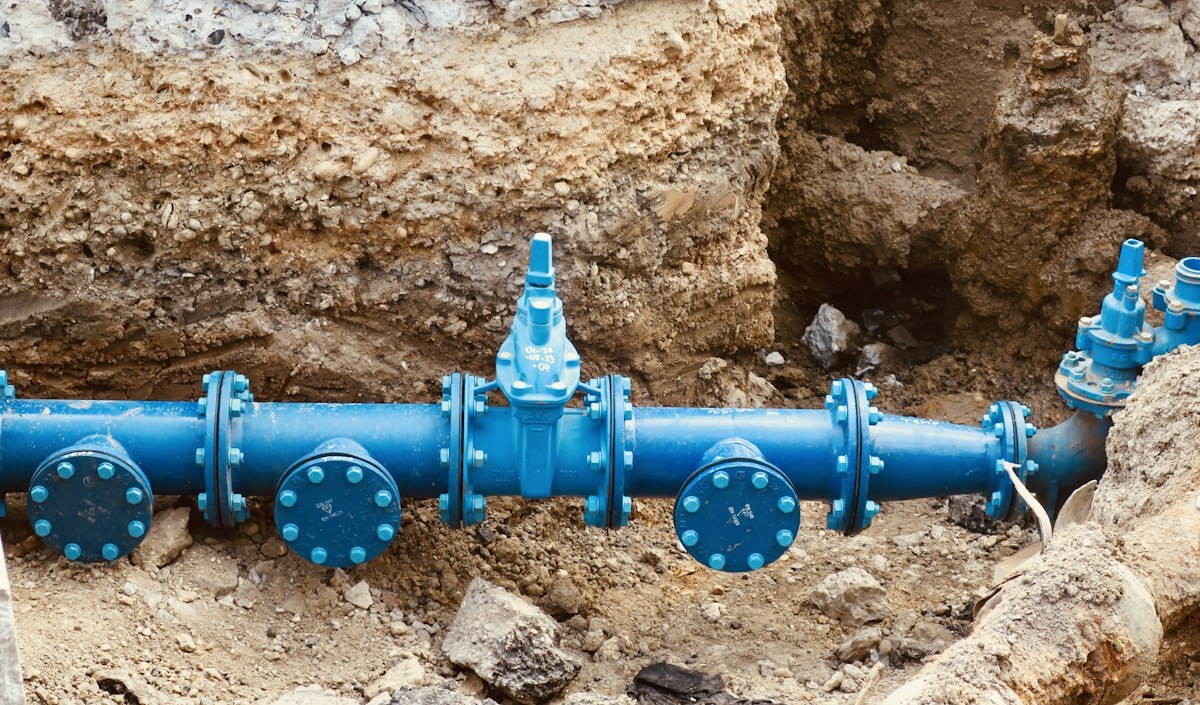
The service data sheet is the handoff between process, mechanical, civil, corrosion and procurement teams. It should distinguish normal operation from startup, shutdown, cleaning, testing and credible upset cases. If a value or decision is not yet approved, mark it as open rather than replacing it with a convenient catalog assumption.
| Service input | Why it matters | Procurement output | Approval owner |
|---|---|---|---|
| Medium and composition | Corrosion, contamination, cleanliness and compatibility can depend on constituents, solids and water content. | Material and protection requirements, cleaning and preservation, limits on substitutions. | Process and corrosion authority. |
| Pressure and temperature basis | Normal, design, transient and test conditions affect the engineered wall and component system. | Approved design basis, dimensional requirement and applicable code or project rules. | Responsible design engineer. |
| External exposure | Buried, submerged, indoor, coastal, arid or industrial atmospheres create different protection and inspection needs. | External coating, wrapping, cathodic-protection interface, storage and repair requirements where applicable. | Corrosion and project authority. |
| Installation and joining | Welding, threading, grooving, flanges and mechanical joints require compatible ends, tolerances and field controls. | End type, bevel or thread requirement, coupling or flange interface and transit protection. | Piping and construction authority. |
| Regulatory and client basis | Jurisdiction, owner standards and service category may impose specific materials, tests and records. | Named standards and editions, supplementary requirements, inspection hold points and document list. | Owner and authorized engineer. |
Design boundary: this worksheet organizes inputs for engineering and purchasing. It does not calculate wall thickness, pressure rating, corrosion allowance, flow capacity, span or safety factors.
Classify the service before naming the pipe
Water service
Identify water quality, solids, treatment chemicals, hygiene requirements where applicable, internal corrosion control, external exposure and shutdown conditions. Firewater, raw water, potable water and wastewater should not be treated as one generic duty.
Oil and hydrocarbon service
Define composition, viscosity, water or sediment content, temperature range, leak consequences, cleaning method and applicable pipeline or facility design basis. Do not infer material suitability from the word 鈥渙il鈥?alone.
Gas service
Record gas composition, dryness, contaminants, pressure-temperature envelope, decompression or transient concerns, location class or facility context and the governing engineering standard. The design authority must resolve toughness, welding and integrity requirements.
Do not collapse the service description
鈥淔or water, oil or gas鈥?is a market category, not a complete purchase specification. Two systems carrying the same broad medium may require different standards, grades, dimensions, protection and evidence because their design basis and consequences differ.
Translate service inputs into material and dimensional requirements

Once the design basis is approved, convert it into unambiguous ordering fields. Keep the governing standard and edition beside the grade; keep the nominal designation beside the actual dimensional requirement; and identify any supplementary requirements rather than hiding them in a generic note.
- 1Select the governing product standard and edition. Confirm that its scope, manufacturing routes, dimensions, grades, test provisions and marking align with the project design documents.
- 2State grade and manufacturing route. If seamless, ERW, SSAW or another route is restricted or accepted, write it explicitly. Do not make a blanket strength claim based only on manufacturing route.
- 3State dimensions completely. Use the required NPS or OD, wall thickness or schedule, length, tolerances and any dimensional standard. Schedule alone is not a universal wall value without size and governing standard.
- 4Resolve engineered allowances. Corrosion, erosion, threading, forming, mill tolerance and mechanical design effects belong in the approved calculation and project specification, not in an improvised buyer rule.
- 5Control substitutions. Require written technical review for changes to standard, edition, grade, route, dimensions, chemistry, heat treatment or protection system.
Close the specification with connections, protection and QA evidence

A pipe line item is incomplete if it stops at grade and schedule. Ends, surface protection, testing, traceability and the final document package determine whether the delivered pipe can enter the project workflow without avoidable clarification.
Connections and ends
- Plain, beveled, threaded, coupled, grooved or project-specific preparation.
- Applicable end dimensions, bevel details or thread standard.
- Caps, protectors and cleanliness requirements for shipment and storage.
- Field-joint interface and approved repair responsibility.
Corrosion protection
- Internal lining, external coating or temporary protection specification and edition.
- Surface preparation, coverage, inspection and repair method.
- Compatibility with handling, welding, joining and service conditions.
- Storage-life limitations and preservation renewal where required.
Testing and documents
- Tests required by the governing standard plus approved supplementary testing.
- Material certificate type and traceability from pipe marking to records.
- Coating, dimensional, NDT or test reports when contractually required.
- Inspection points, release authority, packing list and deviation register.
Use a service-to-specification worksheet
The following sequence keeps unresolved engineering questions visible and produces a comparable RFQ.
Prevent common RFQ gaps
| Incomplete wording | Why it is risky | Better question |
|---|---|---|
| Carbon steel pipe for water | It does not identify the water duty, design basis, dimensions, protection or approval requirements. | What water service, pressure-temperature basis, internal protection, external exposure and governing documents apply? |
| A53 or equivalent | 鈥淓quivalent鈥?may conceal differences in scope, type, grade, dimensions, testing or documentation. | Which exact standard, edition, type and grade are approved, and what deviations require review? |
| SCH 40 pipe | Schedule must be tied to size and dimensional standard; it does not define material or service suitability. | What NPS, dimensional standard, schedule or minimum wall and tolerance are required? |
| Standard coating | There is no single universal coating system for all internal and external environments. | Which coating or lining specification, preparation, thickness criteria, repair and inspection apply? |
| Mill test certificate included | It may not define certificate type, traceability, reports or supplementary evidence. | Which certificate, test reports, marking links, inspection records and deviation documents are required? |
Carbon steel pipe specification FAQ
Can one grade cover water, oil and gas service?
Do not assume so. Suitability depends on the approved design basis, governing standard, medium, pressure-temperature conditions, joining, environment, integrity requirements and project rules.
Should the RFQ specify schedule or wall thickness?
Follow the approved project basis. State the size and governing dimensional standard with the required schedule or wall, tolerances and any minimum-wall rule. Avoid schedule-only wording.
Who decides the corrosion allowance and coating system?
The responsible engineering and corrosion authorities decide them under the project design basis. Procurement records and enforces the approved values and specifications.
Is hydrostatic testing always sufficient evidence?
No. A test provides specific evidence under a governing standard and procedure; it does not by itself prove material identity, long-term integrity, coating quality or suitability for every service.
What should happen when service data is incomplete?
List the open items, assign an approval owner and prevent unapproved assumptions from becoming purchase requirements. A supplier quotation should clearly state exclusions and deviations.
Procurement conclusion
A defensible carbon steel pipe specification is a traceable chain from service data to engineering decisions and then to purchase-order fields. Define the medium and design basis first; name the standard, grade, dimensions, ends, protection, tests and records only after approval; and keep every substitution or unresolved input visible. That approach produces comparable quotations without pretending that water, oil and gas service share one universal pipe selection.