

Galvanized Coil Rust Prevention During Ocean Shipping
Galvanized Coil Rust Prevention During Ocean Shipping
Galvanized coil often leaves the mill in good condition and arrives with visible staining after weeks at sea. The gap is rarely the zinc coating itself; it is the moisture, temperature cycling, salt exposure, packing condition and duration of the voyage. A shipping plan that treats corrosion prevention as a controlled process rather than a packing afterthought protects both the surface and the buyer relationship.
This guide explains why white rust forms on galvanized coil during ocean transport, which shipping conditions increase the risk, and which prevention, loading and arrival checks buyers should agree with their supplier before the container is closed.
The Direct Answer
Prevent galvanized coil rust in transit by controlling moisture rather than only covering the surface. Agree the surface treatment and passivation or oiling before packing, use intact moisture barriers with protected edges and bore, load a dry container, add desiccants when the route and duration require them, and inspect and document the coil condition on arrival. Where the purchase order or product standard defines a protective treatment, follow it; do not assume one packing method fits every route.
1. Why White Rust Forms on Galvanized Coil
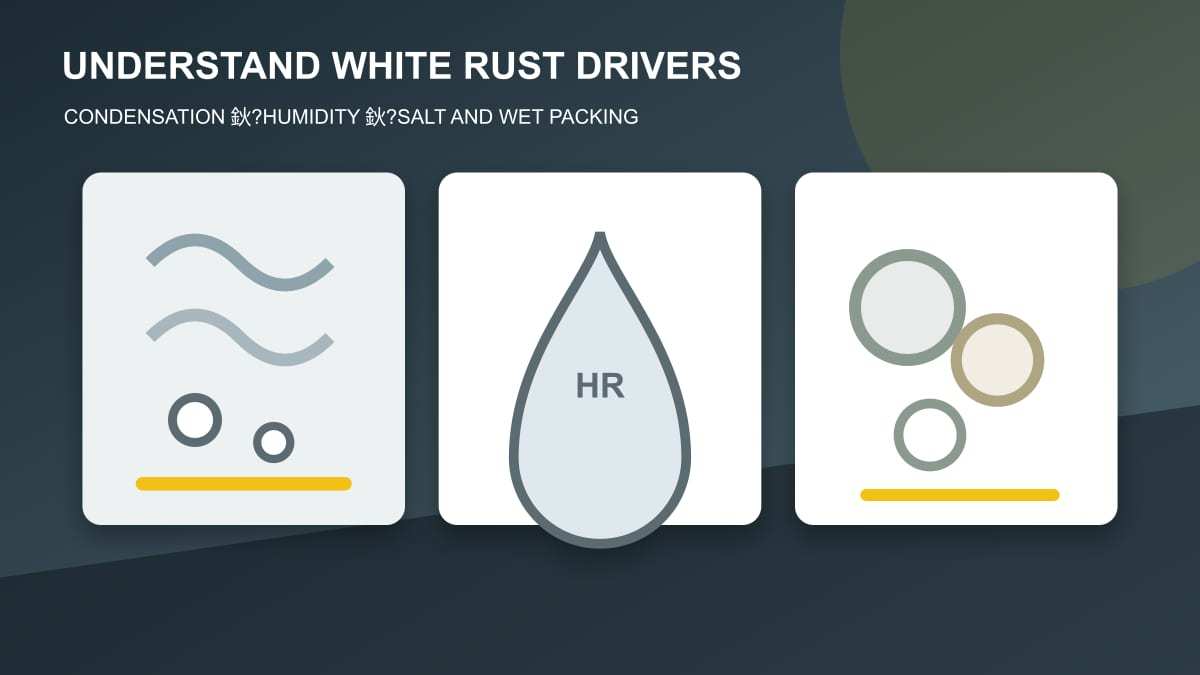
White rust is a zinc corrosion product that forms when the galvanized surface stays wet or repeatedly condenses moisture while oxygen is present and the surface cannot dry out. It differs from the red rust that appears when the zinc layer is consumed and the steel substrate is exposed.
Condensation
Warm humid air meeting a cooler coil surface causes condensation. Daily temperature cycling in transit can wet and rewet the surface even without rain or sea spray entering the pack.
Trapped moisture
Water from rain, washdown, wet straps or damp packing material can be sealed inside the wrapper, where it stays in contact with the surface for the whole voyage.
Salt exposure
Coastal and marine air carries chloride, which accelerates zinc corrosion and can attack exposed edges or any damaged area of the coating.
Long dwell time
The longer the coil stays packed, stacked and transported without drying, the more time moisture has to produce visible staining.
Because several of these factors combine, prevention focuses on keeping the coil dry, stable in temperature and protected at the edges and bore where coating coverage and access are most limited.
2. Shipping Conditions That Increase Risk
| Condition | Why it matters | Buyer check |
|---|---|---|
| High humidity and heat | Warm moist air holds more water and condenses when the coil is cooler, wetting the surface. | Agree the protective treatment and wrapping for the season and route, not only for the mill's in-house storage. |
| Long sea transit and transshipment | Multiple handlings and days at terminals increase exposure and moisture cycling. | Confirm total transit and expected dwell time in the packing plan. |
| Coastal or marine routes | Chloride-rich air and spray accelerate corrosion at edges and damaged areas. | Specify moisture and salt-resistant barriers and record the route. |
| Prolonged port storage | Coils can sit in humid terminals before or after loading without ventilation. | Request dry storage or additional protection where terminal dwell is long. |
| Container rain | Moisture inside the container condenses on cooler cargo and drips onto the coil. | Dry the container, use liners or desiccants where the route requires them. |
These conditions are predictable for most trade lanes. The shipping plan should name them explicitly so the protective measures match the actual exposure instead of a default assumption.
3. Apply Layered Surface Protection
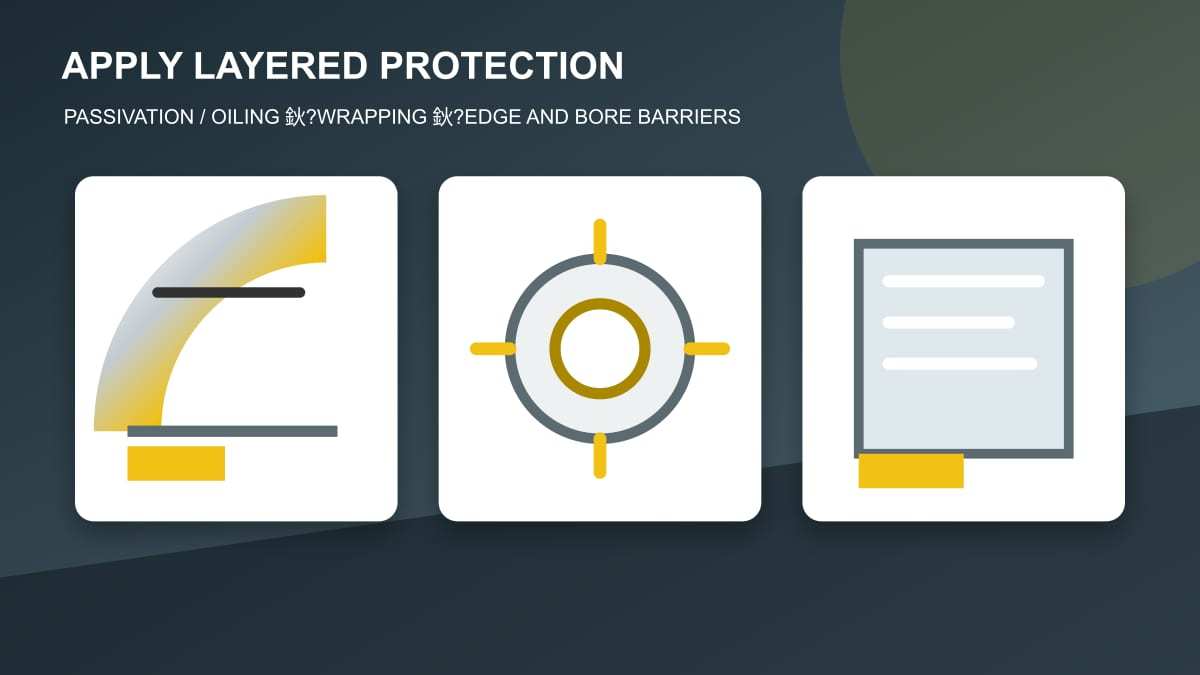
Protection works in layers. Each layer addresses a different failure route, and weakening one layer can shift the risk to another.
- Surface treatment: confirm the passivation, chromate-free treatment or oiling specified in the purchase order or product standard, and record what was applied and when.
- Oiling: where required, verify the oil type, application coverage and compatibility with the buyer's downstream process, especially before painting or coating.
- Wrapper: use an intact, appropriately selected wrap that resists water and does not trap free water against the surface.
- Edge protection: protect coil edges and the bore where the zinc layer is thinnest and moisture is most likely to collect.
- Strapping and skids: secure the coil without crushing or opening the wrap, and isolate it from damp floors or supports.
Do not treat passivation or oiling as a substitute for dry packing. A treated coil sealed with free water inside the wrap can still stain, and any treatment that conflicts with the buyer's processing should be agreed in advance.
4. Manage Moisture in the Container
Container moisture is a frequent cause of arrival staining, even for well-wrapped coils. The goal is to reduce the water available to condense and to keep the coil away from accumulated moisture.
Before loading
- Inspect the container for leaks, holes, damp floors, residue and previous cargo odours or contamination.
- Confirm the container is dry and clean, and record its condition before loading.
- Use liners or barriers when the route and cargo sensitivity require them.
During voyage
- Apply desiccants where the agreement, route or duration calls for them, following the quantity and placement guidance for the cargo and container size.
- Keep cargo away from direct contact with the container roof and walls where condensation forms.
- Preserve ventilation or sealing strategy agreed for the specific route rather than mixing conflicting practices.
Desiccants are a supporting measure, not a licence to load wet cargo. If a coil or its packing is already wet when loading, dry it first or resolve the cause, because desiccants cannot compensate for free water sealed inside.
5. Loading Practice and Documentation
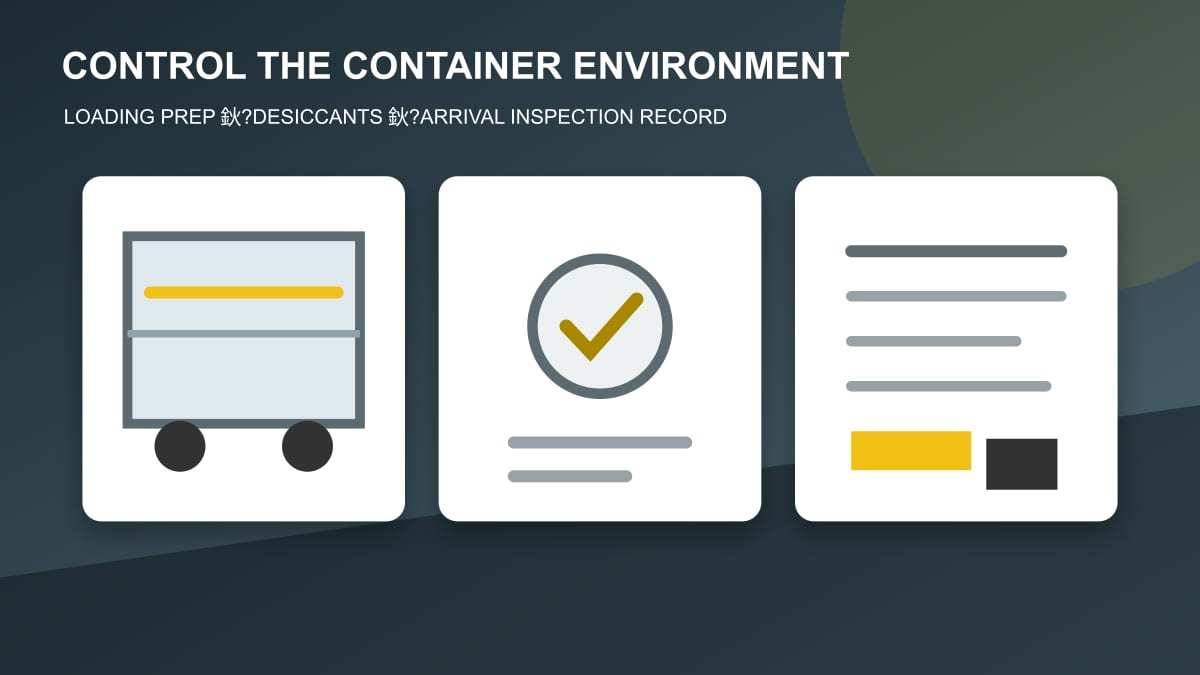
Loading discipline protects the work done in packing. Coils should be loaded so that wraps stay intact, edges and bore protection are not crushed, and moisture cannot collect on the surface.
Handle carefully
Use correct lifting equipment and avoid dragging, dropping or point-loading the coil, which can breach the wrap and expose the surface.
Secure the load
Block and lash the coils so they cannot shift, rub or crush the protective packing during the voyage.
Record condition
Photograph the coil, wrap, edges and container before closing so the pre-shipment condition is documented.
Keep the loading photos, packing list and any treatment records together. If a claim arises later, the pre-shipment evidence separates a packing or shipping cause from a condition that already existed at the mill.
6. Arrival Inspection and Response
Arrival checks should be prompt, because untreated white rust can continue to develop and may be mistaken for a pre-existing defect if documented late.
Inspect before unpacking
Record the external condition of the container, wrapper, straps and edges, ideally before the pack is opened, with dated photographs.
Assess the extent
Distinguish light surface white rust from heavier staining or any red rust indicating zinc loss. Record location, coverage and whether edges or bore are affected.
Preserve evidence
Link photographs to coil identity, container number, bill of lading and arrival date so the record supports a clear timeline.
Agree the response
Follow the contract's notice, inspection and claim process. Do not attempt heavy cleaning that could change the surface before the condition is documented.
Buyer's Shipping Protection Checklist
Surface treatment: passivation or oiling specified in the PO or standard is confirmed, recorded and compatible with the buyer's process.
Packing: outer wrap, edge protection and bore protection are intact and appropriate for the route and season.
Container: dry, clean, inspected and documented before loading, with liners or barriers where required.
Moisture control: desiccants or drying strategy match the transit duration and route, with no free water sealed inside.
Loading: coils are handled, blocked and lashed so packing and protection stay intact.
Documentation: pre-shipment and loading photographs, packing list and treatment records are complete.
Arrival: condition is inspected and documented promptly, with the claim process followed if required.
Common Prevention Mistakes
- Relying on the zinc coating alone and neglecting moisture control in transit.
- Sealing free water or damp packing inside the wrapper before loading.
- Using a desiccant strategy that is undersized for the route, container or cargo.
- Loading a wet or damaged container without inspection and documentation.
- Treating passivation or oiling as a replacement for dry packing.
- Documenting arrival condition late, after the evidence trail has weakened.
- Cleaning heavy staining before the condition is recorded and agreed.
Frequently Asked Questions
Is white rust the same as red rust on galvanized coil?
No. White rust is a zinc corrosion product that forms on the coating surface under wet, poorly ventilated conditions. Red rust appears when the zinc layer is consumed and the steel substrate is exposed. The distinction affects how the condition is evaluated and treated.
Does oiling guarantee the coil will not rust?
No single measure guarantees protection. Oiling, passivation, wrapping and moisture control work together. Where oiling is specified, confirm the oil is compatible with the buyer's downstream processing, especially before painting.
Should desiccants be used on every shipment?
Not necessarily. Desiccant use should match the route, transit duration, container condition and cargo sensitivity as agreed with the supplier. Desiccants support drying but cannot overcome free water already sealed inside the pack.
What should a buyer do when staining is found on arrival?
Inspect and document the container and coil condition promptly with dated photographs and coil identity, follow the contract's notice and claim process, and avoid heavy cleaning before the condition is recorded and the response is agreed.
Final Prevention Principle
Rust prevention for galvanized coil in ocean shipping is a moisture-control process from surface treatment through arrival inspection. Agree the protection for the actual route and season, keep the surface dry and stable, document the condition before and after the voyage, and respond to any staining through the contract rather than assumption. This protects the coil surface and keeps the timeline of responsibility clear.
See the Steel Plate & Coil Guide for related galvanized coil specification, storage and export topics.